L-Arginine Explained: An Amino Acid You Already Eat
L-Arginine is an amino acid, one of the building blocks of protein, found in everyday foods and listed on many supplement labels.
Here is what it is, where it occurs naturally and what to look for when it appears on a bottle.
What is L-Arginine?
L-Arginine is an amino acid. Amino acids are the small molecules that link together to form proteins, and your body uses them in countless everyday processes. The "L" in the name describes the molecular shape, which is the form found in nature and in foods.
You will also see it written as simply "arginine." On a label, "L-Arginine" and "arginine" refer to the same thing, though some products list a specific form such as L-Arginine HCl.
Where you already meet it
Unlike the rare botanicals that come from far-off forests or mountains, L-Arginine is part of ordinary eating. It occurs naturally in many protein foods:
- Poultry, beef and pork
- Fish and seafood
- Dairy products such as milk, yogurt and cheese
- Eggs
- Nuts and seeds, including peanuts, almonds and pumpkin seeds
- Legumes such as chickpeas, lentils and soybeans
- Whole grains such as oats
If you eat a balanced plate with a mix of these, you are already getting some every day. Our guide to eating for steady energy explores how to build meals like that.
Why it appears in supplements
Supplement makers include L-Arginine because it is a well-known, widely studied amino acid, and people who put effort into training and daily routines are often curious about amino acids in general. As with every ingredient, the reason is a general one: it is a recognizable nutrient that many adults look for when they read labels.
That recognizability is helpful. Unlike a long Latin plant name, "L-Arginine" is easy to find and compare across products.
Forms you might see on a label
When you check a Supplement Facts panel, here is what to look for:
- L-Arginine: the standard name, often the free-form amino acid.
- L-Arginine HCl: a version paired with hydrochloric acid, which dissolves readily in liquids.
- Arginine AKG or other pairings: amino acid combinations that some labels use.
The amount is listed by the manufacturer on the panel. If you are new to this skill, understanding supplement labels will help you read the numbers calmly.
Why a liquid format suits an amino acid
Amino acid powders can taste sharp and tend to clump or settle. A liquid dropper bottle gets around mixing and scooping, since the ingredient is already in the liquid. If you like that idea, what are liquid dropper supplements explains the format in more detail.
Food first, supplement second
Because L-Arginine is found in everyday foods, it is a good reminder of a bigger principle. The foundation for strength, vitality and everyday energy is your daily routine:
- Protein-rich meals spread across the day
- Training habits you can stick with
- Hydration that keeps pace with your activity
- Sleep that gives your body time to recover
A supplement fits on top of these, not underneath them.
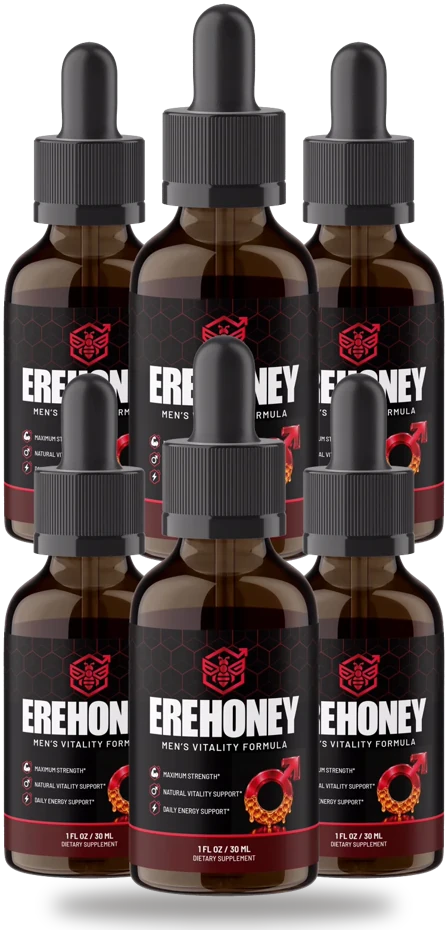
L-Arginine in EreHoney
L-Arginine is one of four named ingredients in EreHoney, a liquid dropper dietary supplement for adult men 18 and over, along with Tongkat Ali, Maca Root and Horny Goat Weed. The full Supplement Facts panel is printed on the bottle.
EreHoney is designed to support men's strength, vitality and everyday energy alongside training, balanced meals, hydration, recovery and good sleep. You take it as directed on the label, straight from the dropper or mixed into water. To see how the four fit together, read four-ingredient formulas explained.
Amino acids in plain language
Proteins are long chains, and amino acids are the individual links. Your body breaks the protein in your meals down into amino acids and then reassembles them as needed. Some amino acids are called essential because you must get them from food. Others, including arginine in most adults, are made by the body as well as eaten.
That background explains why registered dietitians so often talk about overall protein quality and variety instead of focusing on one amino acid. Variety across the week is the simplest strategy.
Everyday plates that include it
You do not need a complicated plan. A breakfast of eggs and oatmeal, a lunch with chicken or chickpeas over greens, and a dinner with fish or lentils all include natural sources. A handful of pumpkin seeds or almonds as a snack adds more. These are ordinary meals, and they show how an amino acid label name connects back to the food on your table.
Reading the panel with a food mindset
When a label lists an amino acid, ask where it sits in the bigger picture: your meals, your training week and your recovery. A supplement panel should complement what you eat, and thinking this way keeps your priorities in the right order.
Where to read more
The NIH Office of Dietary Supplements offers neutral, plain-language fact sheets on amino acids and many other dietary supplement ingredients.
To see EreHoney's pack choices and current details, visit the official order page. It is a one-time purchase, backed by a 60-day money-back guarantee, and sold only through the official website.